
From Blackpool Waves to Boonnak Woks: Local Produce, Thai Soul
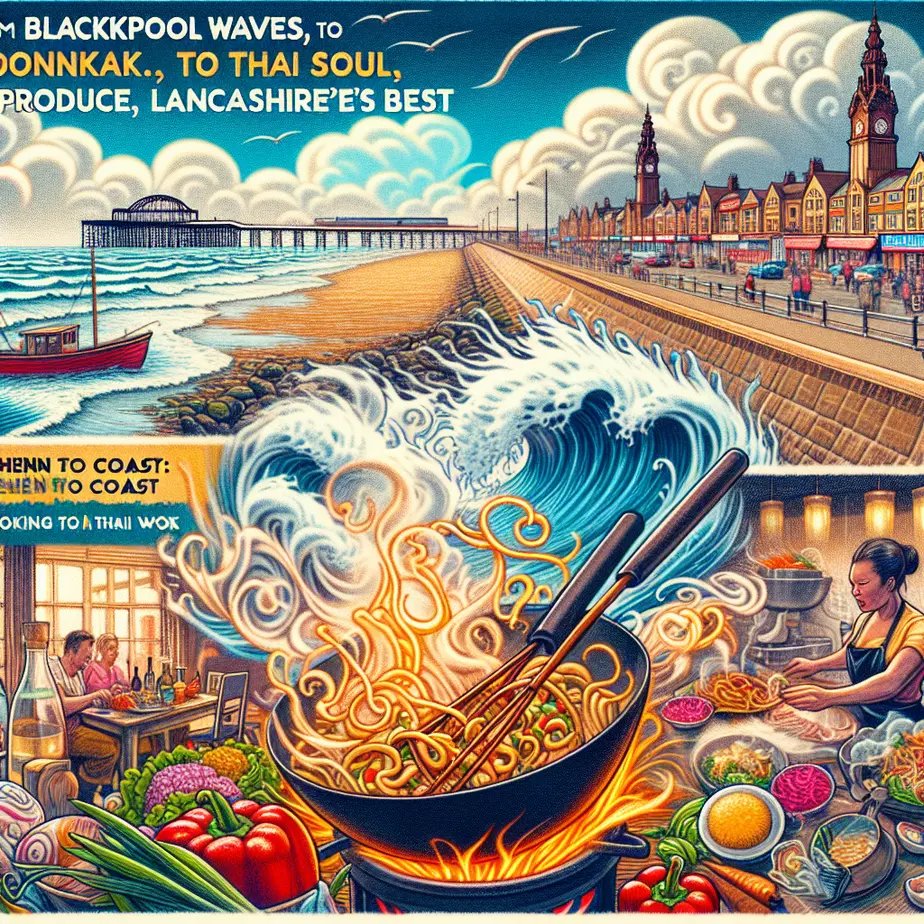
From Blackpool Waves to Boonnak Woks: Local Produce, Thai Soul
Kitchen to Coast: Cooking Thai with Lancashire’s Best
Step off the windy Blackpool promenade and into a hot, hissing wok, and you’ll find a surprising truth: you don’t need a plane ticket to Bangkok to cook food that tastes like real ahn thii (home). In our Boonnak-style kitchen, we trade shipping crates of imported greens for the crisp, sea-kissed vegetables stacked high in Blackpool’s markets. The idea is simple but powerful—use Thai culinary mastery, precise wok hei technique, and bold nam prik pao and nam pla flavors, then let Lancashire soil do the rest. Today’s dish is a coastal riff on classic Thai stir-fry, built entirely on local produce but seasoned with the soul of old-town Thailand.
As we wander the docks and stalls, the hunt becomes a kind of culinary ecology lesson. Instead of pak boong (morning glory), we reach for firm local kale and spring cabbage; where Thai long beans would usually star, we grab crunchy green beans and sugar snaps. The salty sea air and mineral-rich soil here in Blackpool give these vegetables a natural strength—they stay snappy under fierce heat, which is exactly what real Thai wok artistry demands. From a flavor-theory point of view, coastal brassicas echo the slight bitterness and crunch we love in Thai greens, while local carrots and turnips soak up umami from nam pla and kapi (shrimp paste), then bounce it back in each bite.
Ingredients: Blackpool Meets Bangkok
In the middle of service at a local Thai spot like Boonnak, kitchen logistics matter as much as romance. Every second counts between the moment vegetables hit the oil and the instant they leave the wok. That’s where the Blackpool harvest shines. The structural resilience of English veg lets us hit higher heat for longer, unlocking smoky edges without turning everything limp. My own takeaway, after many nights on the line, is that authenticity in Thai cooking lives less in the passport of the ingredients and more in the balance of khem (salty), wahn (sweet), priao (sour), and phet (spicy), and in how confidently you move the wok. When local produce can endure that pressure, it joins the tradition instead of sitting outside it.
- 2 tbsp vegetable or rapeseed oil
- 2 cloves garlic, finely chopped
- 1 small onion, sliced
- 1 cup local kale or spring cabbage, shredded
- 1 cup mixed local greens (green beans, sugar snaps, or broccoli florets)
- 1 small carrot, thinly sliced
- 150 g firm tofu, chicken, or local white fish, bite-sized
- 1 tbsp light soy sauce
- 1 tbsp nam pla (fish sauce) or extra soy for vegetarian
- 1–2 tsp nam prik pao (Thai chilli paste) or crushed chilli
- 1 tsp sugar or local honey
- Juice of 1/2 lime
- Fresh spring onion and coriander for garnish
- Steamed jasmine rice or local short-grain rice, to serve
Instructions: Wok Artistry on the Fylde Coast
To cook this coastal-Thai stir-fry, heat your wok until it almost smokes—this is where real wok hei and Thai culinary precision begin. Swirl in the oil, then add garlic and onion, stirring quickly for 20–30 seconds until fragrant but not burnt. Drop in your protein and keep it moving until just cooked on the outside. Toss in kale, local greens, and carrot, stirring fast so everything sears rather than steams. Splash in soy sauce, nam pla, nam prik pao, and sugar, tasting as you go for that Thai four-way harmony; finish with a squeeze of lime to wake up the dish. Plate it in a way that nods to both Blackpool’s rugged charm and Thai elegance—mounded over hot rice, showered with spring onion and coriander—and then share the story as much as the food. Try cooking this today, and if it surprises you, pass the recipe to a friend and see what your own coastline can bring to the wok.


Leave a Reply
Want to join the discussion?Feel free to contribute!