Behind the Burners: Inside a Post‑Brexit UK Thai Kitchen on the Edge
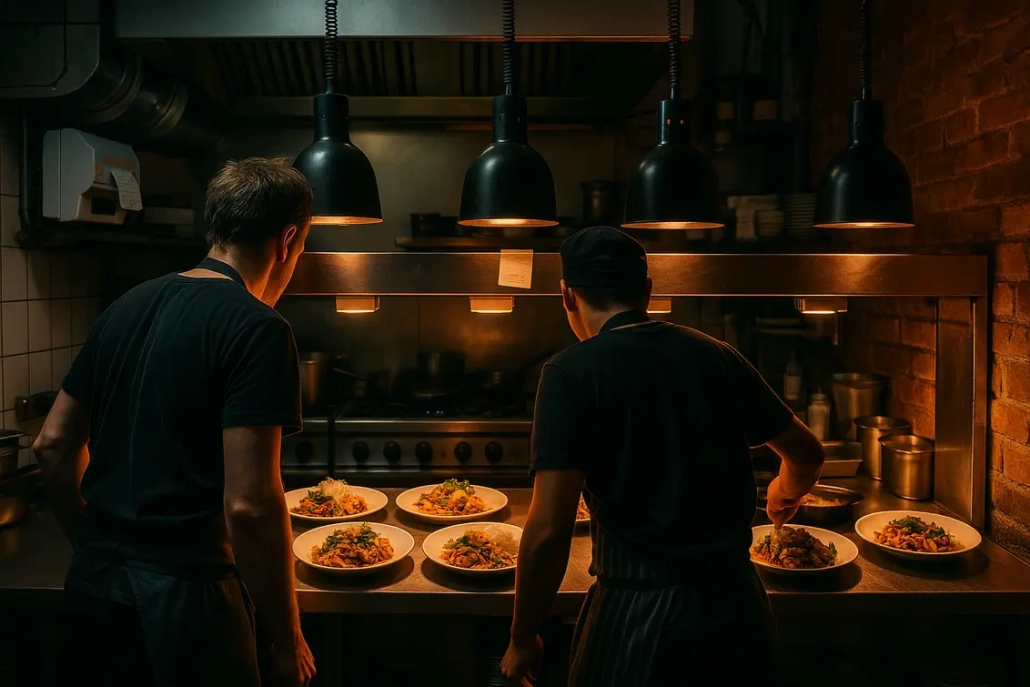
I’m standing at the pass in a small Thai restaurant somewhere in a mid-sized UK city. Six mains are dying under the heat lamps, the ticket machine is still chattering, and there are only two chefs on the line where there used to be five. The scent of holy basil and chili oil hangs thick in the air, but so does something else: fear, fatigue, and the strange, bitter aftertaste of politics made real.
This isn’t just a story about food. It’s a story about a post-Brexit UK Thai kitchen trying to stay alive in a labour market that seems determined to squeeze every last drop of energy from the people who remain. It’s the hidden history of your Friday night curry in 2026: a story of migration, tradition, burnout, and a quiet, stubborn kind of magic that keeps the burners lit when everything else feels like it’s falling apart.
In this article, we’ll step into the stainless-steel trenches of a modern UK Thai restaurant and explore what’s really happening behind those swinging kitchen doors. We’ll look at how post-Brexit labour shortages are reshaping the industry, what it feels like to run a service with half a team, and how ancient Thai culinary traditions are colliding with new British realities. Along the way, I’ll share my own thoughts on wellness, work, and the strange, sacred rituals that keep hospitality going even when it’s on its knees.
The Hidden World Behind Your Pad Thai
Most diners only see the calm surface of the hospitality world: the smiling servers, the immaculate plates, the gentle clink of glasses. But walk through the kitchen door of a busy UK Thai restaurant at 8pm on a Saturday and it feels like a different dimension entirely.
The heat is the first thing that hits you. Woks roar like dragons, blue gas flames licking the sides of carbon steel. Chili smoke stings your eyes. The air hums with shouted orders, clanging pans, the hiss of water on hot metal. There’s a kind of ritual choreography in the chaos – a dance learned over years – but the steps have become more frantic in the last few years.
For Thai kitchens in Britain, this hidden world has always been shaped by migration and adaptation. Many restaurants began as small family businesses, run by first-generation immigrants who brought their recipes, ingredients, and culinary spirits across continents. Over time, those kitchens trained new chefs, often from across Europe and Asia, forming a kind of culinary United Nations in the back of house.
Post-Brexit, that delicate ecosystem has been shaken. The UK Parliament’s own research has highlighted hospitality as one of the sectors most affected by changes to EU migration. For a Thai kitchen in the UK, those statistics become painfully real on a Tuesday prep shift when there simply aren’t enough hands to peel garlic, chop lemongrass, and batch curry pastes from scratch.
Post‑Brexit UK Thai Kitchen: What Changed, Really?
The phrase “post-Brexit UK Thai kitchen” can sound a bit abstract, like a think-tank report or a policy seminar. But inside the kitchen, the changes are brutally simple and painfully physical.
Here’s what the labour shortage often looks like in practice:
- Fewer chefs on each shift, sometimes half the pre‑Brexit team
- Longer working hours, with fewer breaks and more double shifts
- Menu cuts – fewer dishes, fewer specials, less creativity
- Increased burnout, anxiety, and mental health struggles
- Owners stepping back onto the line full-time just to survive
Many UK Thai restaurants used to rely on a mix of local staff and EU workers, especially for roles like kitchen porters, line cooks, and front-of-house. When freedom of movement ended, the talent pool shrank. Recruiting skilled Thai chefs under the new immigration system became more complex and expensive, often beyond the reach of small family-run places.
So the kitchen adapts – but at a cost. Staff who remain take on more responsibilities. A junior wok cook suddenly becomes the grill chef, the starter person, and sometimes the pastry department (which, in Thai terms, can mean whipping up coconut rice and mango between mains).
On paper, it might look like “increased efficiency”. On the line, it feels like survival mode, night after night.
Service in Slow Motion: When Six People’s Work Falls to Three
Imagine you’re the head chef in a post‑Brexit UK Thai kitchen. It’s Saturday. You’re down two people. Bookings are full. Walk-ins are already hovering near the door, peering at menus with hopeful eyes.
The clock hits 7:30pm and the flood begins: orders for pad thai, green curry, massaman, som tam, drunken noodles, whole fried seabass, vegan tofu stir-fries, and the odd table that wants “not too spicy but still authentic” (the eternal riddle). Tickets pile up. The printer spits like an exorcised demon.
With a full team, this kind of storm can feel almost exhilarating – that shared, adrenalised buzz. But now, you have:
- One chef on woks (when you really need three)
- One on starters and fryers (also doing salads and desserts)
- You on the pass, expediting and jumping in wherever the fire’s hottest
The labour shortage turns what used to be a well-paced marathon into an endless sprint. Precision becomes harder to maintain. You start making compromises:
- Do you hold up the entire check to plate perfectly, or get it out quickly so it’s not an hour late?
- Do you stop to remake that curry that came out too mild, or send it and hope the guest accepts it?
- Do you say “no” to that walk‑in table of six, or say “yes” and roll the dice with your team’s sanity?
From the dining room, the worst people usually see is a longer wait, a stressed server, perhaps a dish that doesn’t look as polished as last year. But for the people on the line, each compromise chips away at something deeper: pride, mental health, and sometimes a lifelong love of cooking.
Heat, Spirit, and the Sacred Fire of Thai Cooking
For all the spreadsheets and policy papers, cooking – especially in a Thai kitchen – still feels like a kind of modern alchemy. There’s something almost sacred about the way fire, metal, and motion combine to transform humble ingredients into dishes that carry memory, migration, and identity on a single plate.
In traditional Thai culture, food is more than sustenance. It’s medicine, offering balance between hot and cool, sour and sweet. It’s social glue, binding families and communities. It’s ritual: think of offerings of fruit and jasmine to household spirits, or temple feasts shared after ceremonies. When that tradition travels to Britain, it meets our own rituals: Friday night takeaway, birthday dinners, the “let’s treat ourselves” moment after a bad week at work.
Inside a post‑Brexit UK Thai kitchen, these cultural layers collide every night. The chef cooking your green curry might be silently invoking their grandmother’s techniques while simultaneously worrying about rent, visas, and whether the KP (kitchen porter) will show up tomorrow.
And yet, somehow, the spirit of Thai cooking persists:
- The disciplined way a wok chef controls heat with nothing but wrist and instinct
- The respect for fresh herbs – holy basil, kaffir lime leaves, coriander roots – even when sourcing them has become harder
- The insistence on pounding curry paste by hand, despite aching shoulders and a prep list that never ends
This is where the story edges into the magical. Because in a rational world, this level of pressure should break everything. But hospitality has always had its own strange, stubborn magic – a kind of shared spell that says: “Whatever happens, we feed them.”
Labour Shortages and the Toll on Mental Health
Strip away the romance, and the post‑Brexit UK Thai kitchen is also a tough case study in mental health under pressure. The heat, the long hours, the emotional strain of constant service – none of this is new in hospitality. But labour shortages have turned a demanding job into something more like an emotional endurance test.
When one chef says, “I’m doing the work of three people every single night,” that’s not exaggeration. It’s a lived reality. You see it in:
- Hands that never properly heal from burns and cuts
- Sleep that doesn’t restore because the brain is still on the line
- Anxious checking of rota sheets and WhatsApp groups: “Who’s in tomorrow? Are we covered?”
- The quiet, gnawing fear that one more bad week could mean shutting the doors for good
As a blogger who cares about holistic wellness and the hidden lives behind our favourite foods, I can’t help but see hospitality kitchens as one of the fault lines in our modern society. We talk a lot about self-care and “work-life balance”, yet we still expect a steaming hot curry in under 20 minutes on a Saturday, even while the entire labour system that makes that possible is cracking.
Some chefs cope by armouring up – dark humour, bravado, a kind of gallows wit played out with tongs in hand. Others leave the industry entirely, taking their skills to calmer professions. But many stay, caught between love of the craft and the need to survive.
If you’ve ever worked a line, you know that service has its own emotional weather. Some nights the energy is electric, almost transcendent. Other nights, it’s like swimming through concrete. Post-Brexit, the “concrete” nights have become more common – and that is quietly shaping the future of UK Thai food in ways we’re only just beginning to grasp.
From Empire to Immigration: A Short History of British Curry Culture
To truly understand the post‑Brexit UK Thai kitchen, we need to zoom out for a moment and look at Britain’s longer love affair with “curry” – a word that, historically speaking, is as British as it is Asian.
For centuries, Britain’s relationship with Asian food has been bound up with empire, trade, and migration. The first “curry houses” appeared in the 18th and 19th centuries, often serving a British idea of Indian food. Throughout the 20th century, waves of South Asian migration brought new flavours to British high streets – balti in Birmingham, tandoori in London, and late-night vindaloos everywhere.
Thai food arrived more recently, with a noticeable rise in Thai restaurants from the 1980s onwards. In many ways, Thai cuisine rode the crest of Britain’s growing taste for travel and global flavours – package holidays to Phuket, backpacking in Chiang Mai, cookery books full of lemongrass and coconut milk. By the early 2000s, a UK Thai kitchen was a familiar presence, especially in cities.
The irony, of course, is that this entire landscape was shaped by movement – of people, spices, recipes, and ideas. The very existence of a Thai green curry on a rainy British evening is a small miracle of globalisation, migration, and cultural exchange.
Post‑Brexit, the politics around movement have hardened, even as our palates remain as globally curious as ever. We want the world on our plates, but we’ve made it harder for the people who bring it to us to live and work here. The post‑Brexit UK Thai kitchen is caught in that contradiction every single day.
Urban Secrets: What You Don’t See from the Dining Room
Every city has its visible food scene – the glossy Instagrammable fronts, the edgy pop-ups, the influencers posing with cocktails. But there’s another world tucked into backstreets and above dodgy-looking off-licences: the quiet, hardworking Thai places that have been feeding locals for decades.
Step into one of these urban secrets and you’re likely to find:
- A dining room decorated with a mix of Buddhist imagery, royal portraits, and fairy lights from 2009
- A blackboard of “specials” that are actually the most authentic dishes, written for the brave and the homesick
- Staff who recognise regulars by their order more than their name
Behind all this, the kitchen tells a more complicated story. The chef who once had time to carve carrots into flowers now barely has time to drink water during service. The owner who dreamed of expanding to a second site is instead scraping to keep one afloat. The poster on the staff fridge offering mental health support might be faded or out of date – but it’s there, a quiet acknowledgment that things are hard.
Post‑Brexit labour shortages have hit these independent, often family-run spaces especially hard. Large chains can sometimes absorb shocks: centralised recruitment, HR departments, investors. But the small UK Thai kitchen at the end of your road is often run by people who also work the line, do the books, handle suppliers, and wash dishes when someone calls in sick.
And yet, these are the places that hold real cultural magic: where staff meals are more interesting than the menu, where staff teach each other Thai phrases between orders, where a homesick student from Bangkok might find a bowl of khao soi that briefly makes Britain feel less alien.
The Technical Tightrope: Speed vs Precision
If we shift our gaze from the social and historical to the strictly technical, a post‑Brexit UK Thai kitchen is also an engineering puzzle: how do you maintain culinary precision under relentless pressure with too few people?
Thai cooking – at least in restaurant form – is a deceptively fast cuisine. Wok cooking might take only minutes, but it relies on careful prep and meticulous organisation. When the team is cut, the strain falls on every stage of the process:
- Prep: Fewer hands to chop, marinate, pound, and portion means starting earlier and finishing later.
- Cooking: One wok station doing the job of two leads to bottlenecks, longer waits, and higher stress.
- Plating: The fine details that separate “good” from “memorable” – a final drizzle of chili oil, a properly balanced garnish – are often the first to go when the printer doesn’t stop.
In theory, technology could help. Some kitchens have turned to more pre-made elements, centralised production, or semi-prepped ingredients. But for many Thai chefs, this clashes with their own sense of integrity. A jarred curry paste might save time, but it can’t quite capture the bright, electric flavour of one pounded fresh that morning.
So the kitchen walks a tightrope, trying to balance:
- Speed vs authenticity
- Consistency vs experimentation
- Staff wellbeing vs customer expectations
Whenever I visit these kitchens, I’m struck by how much invisible expertise goes into that balancing act. It’s not just about cooking; it’s about systems thinking under pressure, micro‑adjustments in real time, a sort of culinary crisis management. The labour shortage raises the stakes, but it also reveals how much skill has always been there, hidden in plain sight.
Wellness in the Wok: Is a Healthy Kitchen Possible?
At first glance, “holistic wellness” and “Saturday night service” don’t seem like they belong in the same sentence. Yet if we care about the wellbeing of people who feed us, we need to start asking how a post‑Brexit UK Thai kitchen can become a space that nourishes its staff as well as its guests.
Some small but meaningful shifts are emerging in the industry:
- Shorter services: Reduced opening hours to protect staff energy (though this can hurt revenue).
- Menu engineering: Designing menus that are still exciting but realistically manageable with a smaller team.
- Staff meals: Putting real effort into feeding the team properly – not just scraps inhaled over the bin.
- Mental health support: Initiatives by charities like Hospitality Action offering confidential help to hospitality workers.
It’s not a perfect picture. Many kitchens still operate on the old “suffer in silence” model. But I’ve started to hear more honest conversations in back alleys and staff rooms – chefs talking about anxiety, about panic attacks on the pass, about dreams of a slower, kinder version of hospitality.
Here’s where I think the holistic and the historical meet: British food culture is slowly evolving away from “the customer is always right” towards a more communal understanding that restaurants are living ecosystems, not vending machines. Supporting a post‑Brexit UK Thai kitchen might one day be seen not just as a consumer choice, but as a small act of cultural care.
Myths, Spirits, and the Kitchen as a Threshold
In Thai culture, the spirit world is never very far away. From phi (spirits) in forests and homes to the san phra phum (spirit houses) that stand watch outside buildings, there’s a sense that every space has its unseen inhabitants. Kitchens, too, can feel like liminal places – thresholds where raw becomes cooked, chaos becomes order, and strangers become guests.
Spend enough time in a hard-pressed UK Thai kitchen and you start to notice little rituals that echo older traditions, even if no one consciously names them as such:
- The first bowl of rice quietly set aside before staff meal, “just in case”
- A tiny garland of marigolds tied near the gas supply, absurd and beautiful amid the steel
- A quick wai (hands pressed together) from a chef before a particularly intense service
These gestures are small, but they hint at an older understanding of work as something that involves more than just muscles and money. Even in a post‑Brexit Britain obsessed with productivity metrics, there’s something quietly subversive about treating a punishing kitchen shift as a sort of ritual space – a space where care, skill, and spirit are poured into food that people will carry into their own lives.
Maybe that’s why, even as labour shortages and political fallout grind away at the industry, I still find hope in these kitchens. They are places of transformation – not just of ingredients, but of people. The young KP who becomes a wok chef. The homesick Thai student who finds a second family at staff meal. The British diner who discovers nam prik pao and realises they’ve been lied to by jarred sauces all their life.
What Diners Can Do: Small Acts, Big Impact
So where does all this leave us – the people on the other side of the pass, who love a good pad kra pao and might, if we’re honest, rarely think about who’s cooking it?
Supporting a post‑Brexit UK Thai kitchen doesn’t require grand gestures. Small, conscious choices can ripple out in surprising ways:
- Be patient with wait times, especially at peak hours. If you see a tiny team running the whole show, adjust your expectations.
- Order mindfully. If you’re in a rush, ask what the kitchen can realistically do quickly rather than demanding the most complicated dish.
- Tip fairly. Those extra pounds can mean the difference between despair and “we can manage” after a brutal week.
- Return, don’t just review. A one‑off 5‑star rating is nice; becoming a regular is even better.
- Be kind. A smile, a “thank you”, a word passed to front-of-house about how much you enjoyed the food does get back to the kitchen – and it matters more than you think.
On a broader level, we can also start connecting the dots between our political choices and our culinary pleasures. If we value the richness of Britain’s food culture – from Thai to Nigerian to Polish to Punjabi – then labour policy and migration rules aren’t abstract issues. They shape who can stand behind those burners in the first place.
A Night in the Life: One Service, Many Stories
Let’s end with a composite scene, stitched together from many post‑Brexit UK Thai kitchens I’ve known or visited.
It’s 10:15pm on a Friday. The last main course has just gone out – a sizzling pad cha, heavy with galangal and green peppercorns. The printer has finally fallen silent. In the dining room, the last table is lingering over Singha beer, oblivious to the micro-exodus beginning in the kitchen.
One chef slumps on an upturned crate, peeling off sweat‑soaked gloves and revealing hands patterned with old burns like a map. Another silently begins the next day’s prep – chopping huge sacks of onions, setting stock to simmer – because labour shortages mean tomorrow will start behind unless they steal time from sleep.
The owner does the day’s cash-up, eyes flicking between numbers and an email about rising energy bills. A dishwasher hums like a lullaby. Someone puts on Thai pop music through a cracked phone speaker, and slowly the tension drains from shoulders, jawlines, fists.
Staff meal appears: leftover noodles, a fiercely spicy curry that would never make it to the customer menu, rice piled generously. For ten minutes, the kitchen becomes something else entirely – a small village after harvest, a family after a storm. Jokes are cracked. Stories are shared. Someone mentions a rumour about a new Thai place opening across town; everyone wonders how they’ll manage to find staff.
Outside, on the wet British pavement, a takeaway driver carries the last steaming bag into the night, unaware of the tiny galaxy of history, labour, stress, and sacred fire that produced it.
Conclusion: Keeping the Burners Lit
A post‑Brexit UK Thai kitchen is more than a workplace. It’s a crossroads where global politics meet local hunger, where ancient culinary traditions collide with immigration law, where human bodies and spirits are tested night after night in the glow of the pass.
We’ve explored how labour shortages have reshaped these kitchens – stretching teams thin, increasing burnout, and forcing difficult compromises between speed and authenticity. We’ve looked at the deeper history of Britain’s curry culture, the hidden urban secrets behind familiar high streets, and the quiet rituals that infuse Thai cooking with something close to the sacred.
Yet for all the pressure, there is resilience here too. Chefs adapt menus, owners adjust hours, staff support each other in ways that don’t show up on balance sheets. Diners, when they choose patience and kindness, become part of that survival story. And somewhere between the roar of the wok and the clink of cutlery in the dining room, a fragile but powerful magic persists: the shared belief that feeding people matters, even when the odds are stacked against you.
Next time you sit down to a bowl of tom yum or a plate of pad thai in Britain, remember the invisible world that made it possible – the history, the migration, the sweat, the rituals, and the quiet courage of a post‑Brexit UK Thai kitchen that somehow, against everything, keeps the burners lit.


Leave a Reply
Want to join the discussion?Feel free to contribute!