
The Hidden Fees Eating Our Pad Krapow: How Card Payments Threaten Britain’s Family Kitchens
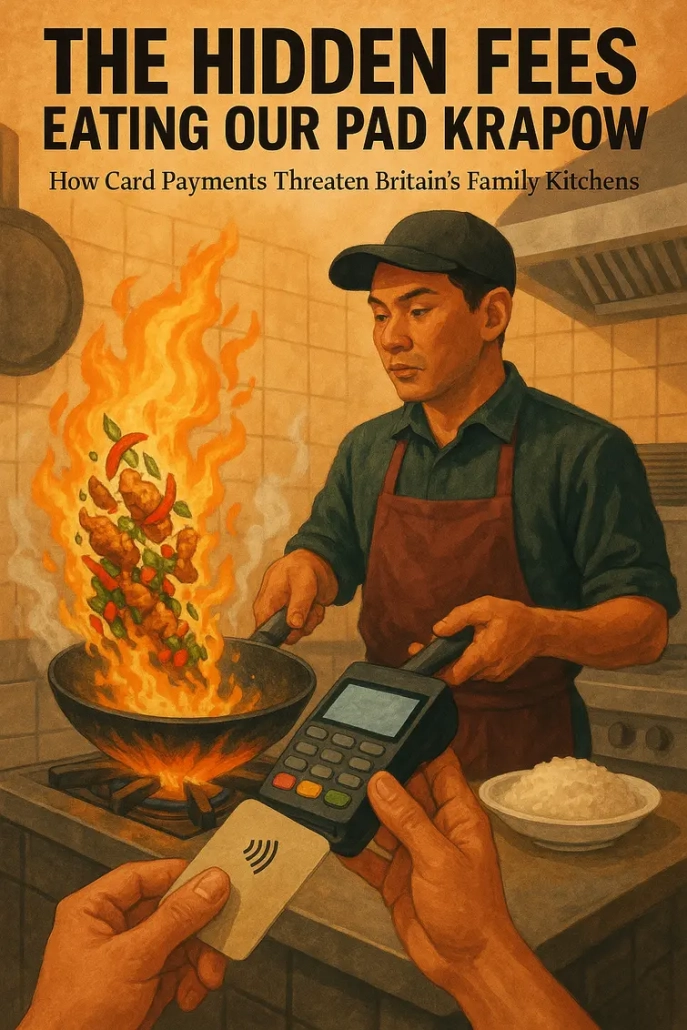
The Silent Bite in Every Contactless Tap
Walk into a cozy Thai café in Leeds or a family chippy in Birmingham and you’ll smell pad krapow gai sizzling, hear the snap of the wok, and feel that warm, lived-in buzz of a true local. What you don’t hear is the quiet click of fees every time someone taps their card. For many Thai UK hospitality owners, each digital payment shaves off a little more than just profit; it steals breathing space from already razor-thin margins, turning every convenient pay wave into a slow erosion of culinary heritage.
Where Your Money Really Goes
The Invisible Drain on the Wok
From the outside, a £12 bowl of khao soi looks like a fair price, but behind the pass the numbers tell a different story. Before a single pound lands in the restaurant’s account, layers of charges have taken their cut: percentage fees, fixed transaction costs, and pricey terminal rentals. In a tiny Thai eatery selling 40–50 covers a night, that can mean the card processor walks away with more profit on a dish than the chef who sourced the holy basil, prepped the curry paste, and controlled the flame with true wok artistry. It’s a strange new flavor theory: the more the card machine eats, the blander local business becomes.
The Complexity Trap for Small Thai and Family Spots
Kitchen Logistics vs. Corporate Contracts
Running a small UK Thai restaurant is already a delicate choreography of kitchen logistics and local ecology: timing the fry on pad thai, balancing spice levels for British palates, ordering fresh pak choi without waste. My own view is that these owners are no longer just chefs; they’re forced into being part-time financial analysts, navigating labyrinthine fee structures that reward volume and punish the slow, rainy Tuesday. Long-term hardware contracts lock them in like a bad marinade, making it harder to switch to fairer systems. Instead of focusing on culinary mastery and authentic Thai craft, they’re stuck decoding statements to see why yesterday’s takings feel oddly light.
The Human and Community Cost
When Heritage Recipes Pay the Price
Behind the pass, the impact is painfully practical. To survive, some kitchens quietly swap premium fish sauce for cheaper brands, thin out coconut milk in tom kha gai, or trim staff hours until the team is stretched to breaking point. These are not greedy markups; they’re survival tactics in a digital landscape that skims from every plate. Across Britain, the result is a high street that slowly loses its individuality, as fragile family-run spots give way to global chains that can absorb fees. When a Thai family closes their restaurant in a small town, the community doesn’t just lose a place for som tam; it loses a living bridge to another culture, another way of cooking, another story.
How Diners Can Help Protect the Local Plate
Practical Ways to Support Your Neighborhood Kitchen
- Ask politely if cash or bank transfer is preferred for bigger bills – many small spots welcome it.
- Order direct from the restaurant instead of third-party apps when possible.
- Support places that display clear, fair-pay messaging and talk openly about fees.
- Accept small price rises as a sign of survival, not greed, especially for independent kitchens.
- Share the story: tell friends, post online, and celebrate the craft behind your favorite gaeng keow wan.
In the end, every plate of steaming pad krapow or crispy fish and chips is a collaboration between cook and community. If we want Britain’s family-run Thai eateries and traditional restaurants to thrive in 2026 and beyond, we need to treat our payment choices with the same care they give to their seasoning. The next time you sit down in your local spot, look past the card machine and see the people, the heritage, and the fragile ecosystem of flavor you’re helping to keep alive—one intentional payment at a time.


Leave a Reply
Want to join the discussion?Feel free to contribute!