
From Wok to Balance Sheet: Thai Flavours and the Brutal New Reality of UK Hospitality in 2026
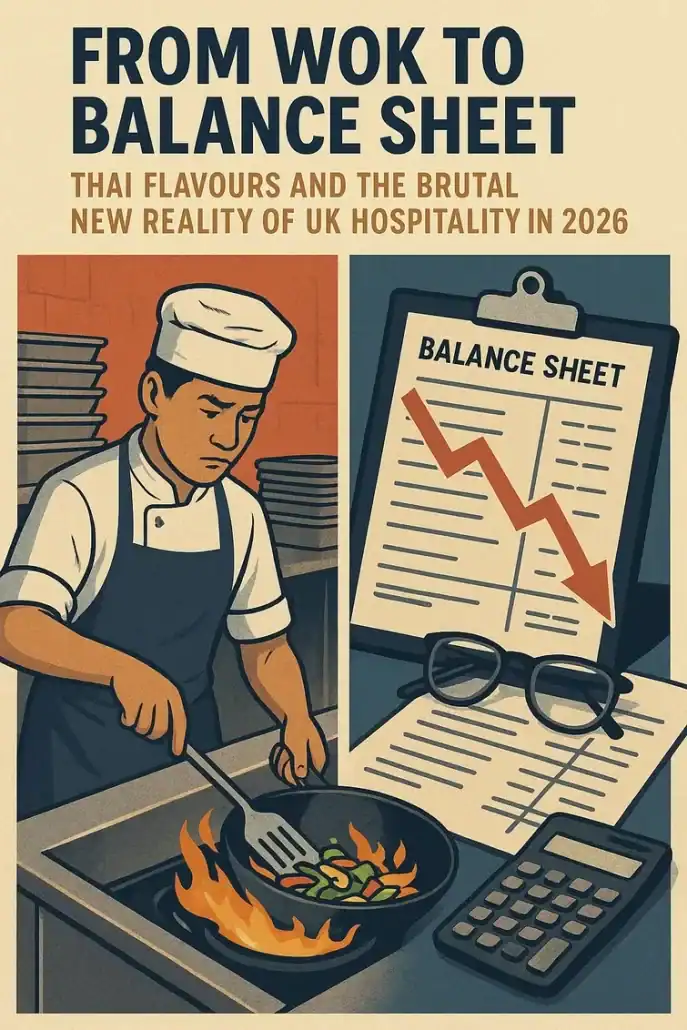
The British Dream in a Thai Kitchen: Still Cooking or Burning Out?
In 2026, many Thai cooks across the UK are quietly asking themselves a painful question: can scrubbing trays and flipping pad kra pao ever really lead to owning a restaurant anymore? The old story was simple: work hard, learn the trade, save money, open your own little place on the high street. Today, that path is squeezed by soaring energy bills, rising food prices, and a constant struggle to find and keep good staff. The British Dream for Thai hospitality workers hasn’t disappeared, but it has morphed into something tougher, more technical, and far less forgiving of mistakes.
To understand the new reality, imagine running a small Thai bistro in a London suburb. Your gas bill jumps every quarter, galangal and fresh krapao cost more than ever, and a 3% profit margin means one slow month can wipe out your savings. At the same time, labour shortages drag you back onto the wok line, so you’re doing double shifts as both head chef and manager. In this world, the real skill isn’t only in getting perfect wok hei on your pad thai; it’s in reading P&L reports, negotiating rent, and deciding whether to accept a delivery platform that keeps 30% of every order. The invisible ceiling is no longer language or experience; it’s overheads and algorithms.
A New Recipe for Survival: From Wok Artistry to Financial Precision
What I see again and again among Thai entrepreneurs is a clash between beautiful culinary mastery and brutal business math. Many grew up tasting nam pla by instinct and balancing tom yum with a quick spoon test, but now they must also balance spreadsheets with the same sensitivity. The old ladder from kitchen porter to owner relied on sweat equity and low setup costs; today, it demands external capital, digital marketing, and an almost scientific approach to menu engineering. Winning means designing dishes that use overlapping ingredients, adjusting portion sizes without losing authenticity, and zoning your operation like a well-planned mise en place—kitchen logistics as survival strategy, not just efficiency. In a way, the most successful Thai spots are treating the entire restaurant like one giant wok: incredibly hot, fast-moving, and unforgiving if you’re even a few seconds late with the right move.
Instead of chasing big dining rooms on expensive streets, the new wave of Thai UK operators are turning to micro-units, dark kitchens, and shared spaces. A tiny khao gaeng counter inside a food hall, a delivery-only som tam lab in a shared kitchen, or a weekend residency in a local pub can all reduce risk while keeping flavours bold and authentic. Here, local ecology matters too: knowing when British-grown herbs can substitute for imported ones, building relationships with nearby growers for chillies and Thai basil, and using seasonal UK produce in creative fusion dishes like gaeng kari with local potatoes or laab made from regional mushrooms. This is where Thai culinary heritage meets pragmatic innovation—honouring the soul of the cuisine while hacking the UK supply chain to stay afloat.
For anyone still dreaming of moving from the sink to the signboard, the path is narrower but not gone. It now demands financial literacy as carefully honed as your knife skills, digital savvy alongside your wok artistry, and a community-first mindset that turns guests into loyal regulars, not just one-off delivery tickets. If you’re ready to treat your Thai kitchen as both a craft studio and a living spreadsheet—testing menus, tracking waste, learning from each service like a scientist—your British Dream can evolve rather than vanish. Start small, stay curious, protect your margins like you protect your nam prik pao recipe, and remember: the future belongs to the cooks who can season balance sheets as confidently as they season pad kra pao.
Ingredients: A Survival Mise en Place for Thai UK Restaurateurs
- Clear personal financial plan (savings target, emergency fund)
- Basic accounting tools or software to track daily sales and costs
- Lean menu built around overlapping nam prik, curries, and stocks
- Reliable suppliers for key Thai ingredients (or UK-grown alternatives)
- Understanding of local business rates and energy contracts
- Simple social media presence showcasing authentic wok action
- Access to a shared kitchen, micro-site, or pop-up space
- Mentor or peer group in the Thai and wider hospitality community
Instructions: Step-by-Step Guide to Your Modern Thai UK Dream
- Audit your reality: List your current skills—culinary, financial, digital—and note the gaps. Treat this like checking your fridge before service.
- Start lean: Test your concept via weekend pop-ups, markets, or delivery-only menus instead of rushing into a long lease on a big site.
- Engineer the menu: Design dishes that share sauces, pastes, and prep work so you can keep flavours deep while cutting waste and labour.
- Master the numbers: Track food cost, labour, rent, and energy weekly; aim for realistic margins and adjust prices or portions quickly when needed.
- Go digital wisely: Use delivery platforms and social media, but negotiate fees, push direct orders, and own your customer relationships.
- Build your team ecosystem: Invest in training and fair schedules so staff feel part of a kruea (kitchen family), reducing costly turnover.
- Adapt to local ecology: Work with UK seasons and nearby suppliers to stabilise costs while creating unique Thai–British specials.
- Review and refine: Every month, sit down with your numbers like you would with a new recipe, adjust the “seasoning,” and plan your next move.
If this picture of UK hospitality feels intense but you still feel a fire in your chest when you hear the sound of a hot wok, don’t walk away—prepare smarter. Start by mapping your idea, testing it in the smallest possible format, and learning the language of costs and margins one line at a time. The British Dream for Thai cooks isn’t dead; it’s just much more demanding, more analytical, and more collaborative. Take your first step today: talk to another owner, visit a shared kitchen, or cost your favourite pad grapao dish properly. Your future restaurant may be smaller, smarter, and less romantic than the old stories—but it can still be proudly, powerfully yours.

Leave a Reply
Want to join the discussion?Feel free to contribute!